Safe Cloud Storage Act
Sponsor: Laurel M. Lee + 5 cosponsors · introduced Mar 5, 2026
Latest action (Nov 24, 2026): Presented to President.congress.gov →
Official summary (Congressional Research Service)
Safe Cloud Storage Act This bill limits the civil and criminal liability of vendors that contract with law enforcement agencies to provide digital storage services (e.g., cloud-based storage) for storing, maintaining, and processing child sexual abuse material (CSAM) in investigations of online child sexual exploitation. Under current law, the National Center for Missing & Exploited Children (NCMEC) receives reports of online child sexual exploitation via its CyberTipline, evaluates and prioritizes the reports, and refers the reports to law enforcement agencies to investigate. Currently, federal law limits the liability of vendors that contract directly with the NCMEC to store and transfer CSAM. However, federal law does not limit the liability of vendors that contract with law enforcement agencies to assist in investigations. This bill establishes liability protections for vendors that contract with federal, state, and local law enforcement agencies to store, maintain, and process CSAM in investigations of online child sexual exploitation. Specifically, the bill prohibits a civil claim or criminal charge in federal or state court against such a vendor, so long as the vendor has not engaged in intentional misconduct or negligent conduct, acted with malice or reckless disregard, or acted for a purpose unrelated to its contractual duties. The bill requires vendors to comply with cybersecurity requirements for CSAM that is stored, maintained, or processed. The bill also requires vendors to comply with storage requirements for CSAM that is retained as evidence.
[Congressional Bills 119th Congress]
[From the U.S. Government Publishing Office]
[H.R. 7834 Enrolled Bill (ENR)]

        H.R.7834

                     One Hundred Nineteenth Congress

                                 of the

                        United States of America

                          AT THE SECOND SESSION

          Begun and held at the City of Washington on Saturday,
          the third day of January, two thousand and twenty-six

                                 An Act

   To limit liability for certain entities storing child sexual abuse
     material for law enforcement agencies, and for other purposes.

    Be it enacted by the Senate and House of Representatives of the
United States of America in Congress assembled,
SECTION 1. SHORT TITLE.
    This Act may be cited as the ``Safe Cloud Storage Act''.
SEC. 2. STORAGE OF CHILD PORNOGRAPHY, CHILD OBSCENITY, AND INTIMATE
VISUAL DEPICTIONS OF MINORS.
    (a) In General.--Title II of the PROTECT Our Children Act of 2008
(34 U.S.C. 21101 et seq.) is amended by inserting after section 201 the
following:
    ``SEC. 202. MODERNIZING LAW ENFORCEMENT'S ABILITY TO STORE CHILD
      PORNOGRAPHY, CHILD OBSCENITY, AND INTIMATE VISUAL DEPICTIONS OF
      MINORS AND LIMITED LIABILITY FOR APPROVED VENDORS.
    ``(a) Definitions.--In this section:
        ``(1) Approved vendor.--The term `approved vendor' means a
    cloud service provider that--
            ``(A) complies with the security requirements described in
        subsection (c); and
            ``(B) has been contractually retained by a covered agency
        to support the duties of such agency by--
                ``(i) storing digital child pornography, child
            obscenity, or an intimate visual depiction of a minor;
                ``(ii) making such child pornography, child obscenity,
            or intimate visual depiction of a minor available to the
            contracting agency, or any law enforcement or prosecutorial
            agency designated by the contracting agency, upon request;
            and
                ``(iii) providing maintenance, technical and analytical
            assistance, and forensic tool processing support upon
            request by the contracting agency.
        ``(2) Child pornography.--The term `child pornography' has the
    meaning given that term in section 2256(8) of title 18, United
    States Code.
        ``(3) Cloud service provider.--The term `cloud service
    provider' means an organization, corporation, or entity that makes
    available digital storage services, including remote or cloud-based
    storage, and analytical and forensic tool processing support.
        ``(4) Covered agency.--The term `covered agency' means a
    Federal, State, Tribal, or local law enforcement or prosecutorial
    agency.
        ``(5) Intimate visual depiction of a minor.--The term `intimate
    visual depiction of a minor' means an intimate visual depiction, as
    defined in section 223(h) of the Communications Act of 1934 (47
    U.S.C. 223(h)), including a digital forgery, of an identifiable
    individual who is a minor, as that term is defined in such section.
        ``(6) Local.--The term `local' means any political subdivision
    of a State.
        ``(7) State.--The term `State' means any of the 50 States of
    the United States, the District of Columbia, the Commonwealth of
    Puerto Rico, the Virgin Islands of the United States, Guam,
    American Samoa, or the Commonwealth of the Northern Mariana
    Islands.
    ``(b) Limited Liability for Approved Vendors.--
        ``(1) Limited liability for law enforcement approved vendors.--
    Except as provided in paragraph (2), a civil claim or criminal
    charge may not be brought in any Federal or State court against an
    approved vendor relating to the approved vendor's performance of
    any contractual obligation or service described in subsection
    (a)(1).
        ``(2) Intentional, reckless, or other misconduct.--A civil
    claim or criminal charge may be brought in any Federal or State
    court against an approved vendor if the approved vendor--
            ``(A) engaged in--
                ``(i) intentional misconduct; or
                ``(ii) negligent conduct; or
            ``(B) acted, or failed to act--
                ``(i) with actual malice;
                ``(ii) with reckless disregard to a substantial risk of
            causing injury without legal justification; or
                ``(iii) for a purpose unrelated to the performance of
            any responsibility or function described in subsection
            (a)(1)(B).
    ``(c) Vendor Cybersecurity Requirements.--With respect to any child
pornography, child obscenity, or intimate visual depiction of a minor
stored, maintained, or processed by an approved vendor, such approved
vendor shall--
        ``(1) secure such child pornography, child obscenity, or
    intimate visual depiction of a minor in a manner that is consistent
    with the most recent version of the Cybersecurity Framework
    developed by the National Institute of Standards and Technology, or
    any successor thereto;
        ``(2) only access the child pornography, child obscenity, or
    intimate visual depiction of a minor upon consent of the covered
    agency contracting the service and for the purpose of providing
    maintenance, technical assistance, and forensic tool processing
    support in the cloud;
        ``(3) minimize the number of employees that may be able to
    obtain access to such child pornography, child obscenity, or
    intimate visual depiction of a minor and maintain a list of
    employees who have obtained such access;
        ``(4) employ end-to-end encryption for data storage and
    transfer functions, or an equivalent technological standard;
        ``(5) undergo an independent annual cybersecurity audit to
    determine whether such child pornography, child obscenity, or
    intimate visual depiction of a minor is secured as required by
    paragraphs (1), (3), and (4), including by assessing compliance
    with the National Institute of Standards and Technology Special
    Publication 800-53, Revision 5 (relating to security and privacy
    controls for information systems and organizations) or any
    successor documents or revisions; and
        ``(6) promptly address all issues identified by an audit
    described in paragraph (5).
    ``(d) Evidence Storage.--Any covered agency that stores child
pornography, child obscenity, or an intimate visual depiction of a
minor pursuant to a contract with an approved vendor shall retain such
evidence--
        ``(1) in compliance with the security policy of the Criminal
    Justice Information Services Division of the Federal Bureau of
    Investigation, or any other similar and appropriate division within
    the Federal Bureau of Investigation;
        ``(2) for a period consistent with the evidence retention
    requirements applicable to the covered agency under the relevant
    Federal, State, or local law, rule of criminal procedure, or
    prosecutorial policy; or
        ``(3) in the absence of such law, rule, or policy, for a period
    not less than the applicable statute of limitations or the duration
    of any sentence imposed, including the period of post-conviction
    review.
    ``(e) Additional Requirements for Approved Vendors.--
        ``(1) Location of data.--
            ``(A) In general.--Except as provided in subparagraph (B),
        each approved vendor shall ensure that any child pornography,
        child obscenity, or intimate visual depiction of a minor stored
        pursuant to this section remains in the United States.
            ``(B) Exception.--Child pornography, child obscenity, and
        intimate visual depictions of a minor stored under this section
        may be transferred outside the United States only with the
        express consent of the contracting covered agency if such
        agency deems the transfer necessary for investigative purposes.
        ``(2) Notification letter.--
            ``(A) In general.--Approved vendors shall file a
        notification letter with the Criminal Division of the
        Department of Justice not later than 30 days after entering
        into a contract described in subsection (a)(1)(B).
            ``(B) Contents.--The notification letter described in
        subparagraph (A) shall include the entity name and point of
        contact information of the approved vendor, the name of the
        contracting covered agency, the period of performance of the
        contract, and an acknowledgment by the approved vendor that the
        approved vendor will notify the Child Exploitation and
        Obscenity Section of the Criminal Division of the Department of
        Justice of any changes to the information in the letter.
        ``(3) Breach of contract.--
            ``(A) In general.--If a covered agency fails to make
        required payment under a contract, breaches any material term
        of such contract, or otherwise terminates such contract without
        establishing lawful transfer of the evidence, the approved
        vendor shall, not later than 30 days after the failure, breach,
        or termination, notify the Criminal Division of the Department
        of Justice in the case of a breach by a Federal agency, or the
        appropriate State attorney general in the case of a breach by a
        State or local agency.
            ``(B) Maintenance of evidence.--Upon making a notification
        under subparagraph (A), the approved vendor shall continue to
        preserve and maintain the integrity of the evidence until a
        prompt and lawful transfer of custody occurs to the Criminal
        Division of the Department of Justice or another Federal,
        State, or local law enforcement agency with jurisdiction.
    ``(f) Rule of Construction.--Nothing in this section shall be
construed to--
        ``(1) limit bona fide use by the contracting covered agency of
    child pornography, child obscenity, or intimate visual depiction of
    a minor being stored by the approved vendor, which includes
    providing such child pornography, child obscenity, or intimate
    visual depiction of a minor to any other party as necessary for an
    investigation or prosecution;
        ``(2) limit the obligation of the contracting covered agency to
    comply with a constitutional or statutory obligation, court order,
    or request from a victim made pursuant to section 3509(m)(3) of
    title 18, United States Code; or
        ``(3) authorize or require the audit, assessment, or compliance
    verification of a governmental entity or any system administered by
    a governmental entity.''.
    (b) Clerical Amendment.--Section 1(b) of the PROTECT Our Children
Act of 2008 (Public Law 110-401; 122 Stat. 4229) is amended by
inserting after the item relating to section 201 the following:
``Sec. 202. Modernizing law enforcement's ability to store child
          pornography, child obscenity, and intimate visual depictions
          of minors and limited liability for approved vendors.''.

                               Speaker of the House of Representatives.

                            Vice President of the United States and
                                               President of the Senate.
Showing: Enrolled Bill. Your stance applies to the bill as it stands here.Read the full text (11,457 characters) →
Text chain
What members said about this bill, in time order.
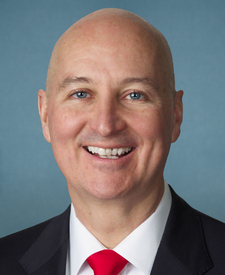 Pete RickettsR · Senator, NE· Nov 16, 2026SAFE CLOUD STORAGE ACT
I ask unanimous consent that the Senate proceed to the immediate consideration of H.R. 7834, which was received from the House.
No Yea or Nay vote recorded- Pete RickettsR · Senator, NE· Nov 16, 2026SAFE CLOUD STORAGE ACT
I ask unanimous consent that the bill be considered read a third time and passed and that the motion to reconsider be considered made and laid upon the table.
No Yea or Nay vote recorded
Roll-call votes
No roll-call votes recorded yet.
Bill history (20 actions)
- 2026-11-24Presented to President.
- 2026-11-24Presented to President.
- 2026-11-17Message on Senate action sent to the House.
- 2026-11-16Passed Senate without amendment by Unanimous Consent. (consideration: CR S5701)
- 2026-11-16Passed/agreed to in Senate: Passed Senate without amendment by Unanimous Consent.
- 2026-09-17Received in the Senate, read twice.
- 2026-09-16Motion to reconsider laid on the table Agreed to without objection.
- 2026-09-16On motion to suspend the rules and pass the bill, as amended Agreed to by voice vote. (text: CR H5936-5937)
- 2026-09-16Passed/agreed to in House: On motion to suspend the rules and pass the bill, as amended Agreed to by voice vote. (text: CR H5936-5937)
- 2026-09-16DEBATE - The House proceeded with forty minutes of debate on H.R. 7834.
- 2026-09-16Considered under suspension of the rules. (consideration: CR H5936-5938)
- 2026-09-16Ms. Lee (FL) moved to suspend the rules and pass the bill, as amended.
- 2026-09-08Placed on the Union Calendar, Calendar No. 703.
- 2026-09-08Reported (Amended) by the Committee on Judiciary. H. Rept. 119-804.
- 2026-09-08Reported (Amended) by the Committee on Judiciary. H. Rept. 119-804.
- 2026-07-15Ordered to be Reported (Amended) by the Yeas and Nays: 24 - 0.
- 2026-07-15Committee Consideration and Mark-up Session Held
- 2026-03-05Referred to the House Committee on the Judiciary.
- 2026-03-05Introduced in House
- 2026-03-05Introduced in House