No donor data for H. Morgan Griffith yet.
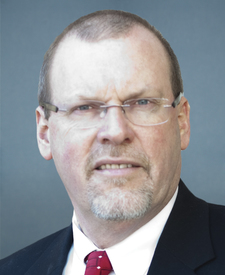
H. Morgan Griffith
VA-9 • Republican
15 years in Congress (first took office 2011)
Sign in and give your stance on bills to see your alignment score with this member.
What H. Morgan Griffith said
- Floor speechNov 10, 2026HOUR OF MEETING ON TOMORROW
Mr. Speaker, I ask unanimous consent that when the House adjourns today, it adjourn to meet at 11 a.m. tomorrow.
Source → - Floor speechNov 10, 2026PROVIDING FOR CONSIDERATION OF H.R. 1013, RETIREMENT FAIRNESS FOR CHARITIES AND EDUCATIONAL INSTITUTIONS ACT OF 2025
Mr. Speaker, I yield myself such time as I may consume. Mr. Speaker, when we finally got to the bill that is the order of the day, there was something that jumped out at me. I was actually planning on just reserving my time, but my colleague, and I suspect he may have gotten excited and misspoke, but he said: This bill does not do anything for ordinary Americans. Mr. Speaker, I ask you, since when does the average schoolteacher not count as an ordinary American? Since when does a nonprofit worker working for some charity or hospital not qualify as an ordinary American? I understand all the other objections the gentleman made about what has been happening and all of his concerns, but this bill lowers the price of buying a retirement product for ordinary teachers, for ordinary nurses, and for ordinary people working for nonprofits. That is what this bill does. It is a commonsense bill. Do you know how we know, Mr. Speaker? It is because some people can say: Well, this is just more Republican rattling going on by Mr. Griffith. However, this bill came out of committee 43-8. It was a bipartisan bill. In fact, a majority of the Democrats on the committee who have heard this bill, 15 of them voted in favor of this measure. Only 8 chose to take the countering course. That is because those 15 understand that this actually helps ordinary Americans. When you boil it down to what this bill is about, Mr. Speaker, it is a good bill for ordinary Americans. It helps to save money long-term for the retirement plans of ordinary Americans, and it puts them in the same place as people who work for for-profit businesses in many cases. Mr. Speaker, I reserve the balance of my time.
Source → - Floor speechNov 10, 2026PROVIDING FOR CONSIDERATION OF H.R. 1013, RETIREMENT FAIRNESS FOR CHARITIES AND EDUCATIONAL INSTITUTIONS ACT OF 2025
Mr. Speaker, I yield myself such time as I may consume. The Rules Committee met last night and favorably reported a rule providing for consideration of one measure, the Retirement Fairness for Charities and Educational Institutions Act of 2025. House Resolution 1650 provides for consideration of H.R. 1013, the Retirement Fairness for Charities and Educational Institutions Act of 2025, under a closed rule. The rule provides for 1 hour of general debate equally divided and controlled by the chair and ranking minority member of the Committee on Financial Services or their respective designees and provides for one motion to recommit. H.R. 1013 is a bill trying to make retirement more secure for a huge swath of the population who work at nonprofit organizations, including at hospitals and public schools. Millions of public schoolteachers, nurses, some first responders, and charity employees depend on section 403(b) tax-sheltered annuity plans for their retirement. These 403(b) plans were set up to provide a way for nonprofits to offer retirement benefits and compete with 401(k) plans and private pensions. However, 403(b) plans have been left behind and have had more restrictive rules around which investments those institutionally sponsored plan managers are allowed to make. The bill allows these plans the option of investing in collective investment trusts if they so choose. Collective investment trusts are similar to mutual funds but have a lower cost to its investors. To clarify, these products are sold to retirement plans and not to individual retail investors. These types of investment decisions are routinely made under the 401(k) plans, and there is no reason for nonprofit workers to be hindered in their retirement returns only because these plans aren't available to them. The types of investments that we are talking about under this bill are already an option for 401(k) beneficiaries and for Federal employee retirement accounts. I have heard some Members on the other side of the aisle act like each retirement plan is forced to invest in collective investment trusts. That is not so. I would also remind them that each plan manager still has to apply fiduciary rules to whatever investment decisions they make for plan beneficiaries. I get the concern. My mother, who has since passed away, was a public schoolteacher. She was a single parent who slept on a couch in our front room so that my sister and I could each have our own bedrooms, so I understand the importance of protecting the retirement of teachers and nonprofit employees. This bill does that. What this bill looks to do is to allow for more competition in the retirement investment market, which will hopefully lead to more plans investing in pools with lower fees and higher returns that ultimately make it more likely for retirees to get bigger payouts. I understand the skepticism when we are looking at a distinct class of retirees. I would emphasize again, there are rules around how retirement plan managers are required to evaluate investments for each plan. Really, what Republicans are aiming to do with this bill is to increase retirement parity and expand access to retirement benefits to people who work for nonprofits or who are schoolteachers. I hope all Members of this House support the passage of this rule and the underlying bill. I urge a ``yes'' vote. Mr. Speaker, I reserve the balance of my time.
Source → - Floor speechNov 10, 2026PROVIDING FOR CONSIDERATION OF H.R. 1013, RETIREMENT FAIRNESS FOR CHARITIES AND EDUCATIONAL INSTITUTIONS ACT OF 2025
Mr. Speaker, I ask unanimous consent that all Members have 5 legislative days in which to revise and extend their remarks.
Source → - Floor speechNov 10, 2026PROVIDING FOR CONSIDERATION OF H.R. 1013, RETIREMENT FAIRNESS FOR CHARITIES AND EDUCATIONAL INSTITUTIONS ACT OF 2025
Mr. Speaker, I yield back the balance of my time.
Source → - Floor speechNov 10, 2026PROVIDING FOR CONSIDERATION OF H.R. 1013, RETIREMENT FAIRNESS FOR CHARITIES AND EDUCATIONAL INSTITUTIONS ACT OF 2025
Mr. Speaker, I yield myself the balance of my time. Mr. Speaker, I urge passage of this rule and adoption of H.R. 1013, the Retirement Fairness for Charities and Educational Institutions Act of 2025. Congress should not continue to deny firefighters, public schoolteachers, and charity workers the cost of effective investments enjoyed by private-sector employees. All this bill does is puts those nonprofit workers and schoolteachers on a level playing field with private-sector employees. Again, this measure passed the Financial Services Committee 43-8, 15 Democrats supporting the measure in committee. It was also incorporated in the strongly bipartisan INVEST Act, which passed the House 302-123 with 87 Democrats in support. This should be an easy vote to help make retirement more affordable and more secure for millions of people who work at nonprofit organizations. Accordingly, Mr. Speaker, I ask that everybody vote for this rule and for the underlying bill. Mr. Speaker, I move the previous question on the resolution. The text of the material previously referred to by Mr. McGovern is as follows:
Source → - Floor speechNov 10, 2026PROVIDING FOR CONSIDERATION OF H.R. 1013, RETIREMENT FAIRNESS FOR CHARITIES AND EDUCATIONAL INSTITUTIONS ACT OF 2025
Mr. Speaker, I yield myself such time as I may consume. Mr. Speaker, I find it interesting. I enjoy playing by the rules. I love the rules. As Jefferson's Manual states--I am going to have to paraphrase because I couldn't pull it up fast enough--there is nothing that tends to throw more power into the hands of the administration of a legislative body than a failure to follow the rules. While my esteemed colleague would have you believe that I am attempting to squelch debate, I am actually just trying to make sure that we are following the rules. Mr. Speaker, I reserve the balance of my time.
Source → - Floor speechNov 10, 2026PROVIDING FOR CONSIDERATION OF H.R. 1013, RETIREMENT FAIRNESS FOR CHARITIES AND EDUCATIONAL INSTITUTIONS ACT OF 2025
Mr. Speaker, for the purpose of debate only, I yield the customary 30 minutes to the gentleman from Massachusetts (Mr. McGovern), pending which I yield myself such time as I may consume. During consideration of this resolution, all time yielded is for the purpose of debate only.
Source → - Floor speechNov 10, 2026PROVIDING FOR CONSIDERATION OF H.R. 1013, RETIREMENT FAIRNESS FOR CHARITIES AND EDUCATIONAL INSTITUTIONS ACT OF 2025
All right. In that case, I would withdraw my objection.
Source → - Floor speechNov 10, 2026PROVIDING FOR CONSIDERATION OF H.R. 1013, RETIREMENT FAIRNESS FOR CHARITIES AND EDUCATIONAL INSTITUTIONS ACT OF 2025
Mr. Speaker, is the gentleman correct that the appropriate time to raise the objection would be if the amendment passes?
Source → - Floor speechNov 10, 2026PROVIDING FOR CONSIDERATION OF H.R. 1013, RETIREMENT FAIRNESS FOR CHARITIES AND EDUCATIONAL INSTITUTIONS ACT OF 2025
Mr. Speaker, I have a parliamentary inquiry.
Source → - Floor speechNov 10, 2026PROVIDING FOR CONSIDERATION OF H.R. 1013, RETIREMENT FAIRNESS FOR CHARITIES AND EDUCATIONAL INSTITUTIONS ACT OF 2025
Mr. Speaker, the gentleman referred to it as an amendment and asked that the text be placed into the Record. Then, if the previous question is defeated, then it would be brought forward, as I understood it. Maybe I misunderstood it.
Source → - Floor speechNov 10, 2026PROVIDING FOR CONSIDERATION OF H.R. 1013, RETIREMENT FAIRNESS FOR CHARITIES AND EDUCATIONAL INSTITUTIONS ACT OF 2025
Mr. Speaker, I raise a point of order. The amendment, as I heard it being discussed, has no relevancy and, therefore, is not germane to the underlying bill.
Source → - Floor speechNov 10, 2026PROVIDING FOR CONSIDERATION OF H.R. 1013, RETIREMENT FAIRNESS FOR CHARITIES AND EDUCATIONAL INSTITUTIONS ACT OF 2025
Objection.
Source → - Floor speechNov 10, 2026PROVIDING FOR CONSIDERATION OF H.R. 1013, RETIREMENT FAIRNESS FOR CHARITIES AND EDUCATIONAL INSTITUTIONS ACT OF 2025
Mr. Speaker, let me make it clear. This is a bill about retirement investment plans. It has nothing to do with tariffs. Just so everybody understands, it is not about tariffs, and it lowers costs today. Now, it is true that the money may not be reaped until the future, but it lowers costs today because it is anticipated that this bill will lower the fees on the retirement plans that many of our nonprofit workers and our schoolteachers use for their retirements. Mr. Speaker, I reserve the balance of my time.
Source → - Floor speechNov 10, 2026PROVIDING FOR CONSIDERATION OF H.R. 1013, RETIREMENT FAIRNESS FOR CHARITIES AND EDUCATIONAL INSTITUTIONS ACT OF 2025
Mr. Speaker, by direction of the Committee on Rules, I call up House Resolution 1650 and ask for its immediate consideration.
Source → - Floor speechNov 9, 2026EFFICIENT NUCLEAR LICENSING HEARINGS ACT
Mr. Speaker, I thank my colleague, Chairman Latta, for yielding. Mr. Speaker, I rise today to speak in favor of this bill, H.R. 5549, the Efficient Nuclear Licensing Hearings Act. I am proud to see this bipartisan bill that I introduced along with Congresswoman Schrier and Congressman Veasey make its way to the House floor. H.R. 5549 would amend the Atomic Energy Act to repeal the requirement for a public nuclear reactor licensing hearing even when no one in the public or an affected party requests a hearing. Essentially, the Nuclear Regulatory Commission staff is required by law to contest the license in an adversarial, court-like hearing, even if no member of the public has any objections to the license. In most cases, these mandatory hearings for operating licenses only occur because they are required by law, not because they are essential evidence gathering exercises for the NRC. They really are hearings that no one asked for or wants. Uncontested hearings are rarely necessary these days. Mandatory hearings are relics of the 1950s when the nuclear licensing processes were created and every reactor design was novel or different. These hearings were intended to stress test each reactor design and have technical experts debate the merits of each project. When the mandatory hearing was adopted in 1957, there were no civil nuclear energy reactors operating in the United States. Today there are 94. The original nuclear regulator, the Atomic Energy Commission, was abolished in 1974, yet the mandatory hearings remain. Uncontested mandatory hearings are an archaic section of the statute that was put in because of the newness of nuclear energy and because of the then-prevalent procedure-based regulatory structure that emphasized contested hearings, such as those used in electric rate cases. Today, the need for uncontested hearings is not evident and the hearings are simply a waste of resources. We actually heard testimony at Energy and Commerce that witnesses said that the nuclear license applicant pays a fee over $300 an hour for each NRC staff member to prepare for the hearing. One witness said that there could be up to 12 NRC staff at each hearing. As you can see, Mr. Speaker, that could add up fairly quickly. According to one NRC study, on average, a mandatory hearing takes up to 1,000 hours, which is charged to the applicant, and, as my colleague said, could be $4 million pretty easily. Each perfunctory hearing costs a licensing applicant that money. Numerous current and former NRC commissioners nominated by Presidents of both political parties have all agreed that mandatory hearings are not necessary. The staff have also expressed support for repealing the requirement, saying it is unnecessary. Eliminating the uncontested hearing requirement would in no way affect public scoping or siting meetings. Over the years, the NRC statutorily authorized Advisory Committee on Reactor Safeguards has taken on more reactor safety review responsibilities. Additionally, NRC staff independently assess technical data and publish voluminous safety and environment data on its public database. Repealing these hearings would not affect the right of any affected party to request a hearing on specific matters. My bill includes language that specifically leaves open the possibility of the affected party requesting an uncontested hearing. The bill also codifies current NRC practices that use informal, nonadversarial hearing procedures. Finally, the bill requires the NRC to publish a notice of its intent to issue a construction or operating license in the Federal Register at least 30 days before the license takes effect. Over the past two Congresses, the Energy and Commerce Committee has received testimony showing that repealing this hearing requirement will not jeopardize public safety. Mr. Speaker, I thank Dr. Schrier and Congressman Veasey for leading this bill with me, I thank Chairman Latta for his leadership, and I urge all of my colleagues to vote in favor of the passage of this bill.
Source → - Extension of remarksNov 2, 2026RECOGNIZING THE SERVICE AND LEGACY OF CORPORAL BYRON FRANKLIN BEARD, JR.
Mr. Speaker, I rise in recognition of Corporal Byron Franklin Beard, Jr. to honor his courageous service to the U.S. Army Air Force, in which he lost his life after valiantly fighting Japanese forces during World War II. Corporal Beard, a native of Scott County and graduate of Dungannon High School, felt a calling to serve his country and protect the values and freedoms that Americans hold dear. He joined the U.S. Army in 1940 and served with the 409th Signal Company, Aviation, U.S. Army Air Force. Following the Japanese bombing of Pearl Harbor on December 7, 1941, which killed more than 2,400 Americans, the Japanese invaded the Philippines on December 8, 1941. The United States would shortly thereafter formally declare war on Japan and engage Japanese forces in the Pacific Theater and the Philippines. As part of U.S. engagement, Corporal Beard fought in the Philippines. The early battles in the Pacific dealt great losses to U.S. forces. In the Philippines, Japanese invading forces delivered severe blows that led to the surrender of American forces. The enemy captured Corporal Beard and placed him with an estimated 75,000 Filipino and American prisoners of war. These prisoners underwent a torturous 65-mile march towards a Japanese prison camp on what is known as the Bataan Death March. The thousands of prisoners like Corporal Beard faced inhumane conditions and barbaric treatment from their Japanese captors. Intense tropical heat, thirst, starvation and disease contributed to immense suffering. These brutal circumstances resulted in the deaths of many prisoners, including Corporal Beard, who died at the prisoner of war camp on July 22, 1942, at the age of 23. Because of this, for nearly a century, Corporal Beard's remains were never identified. His family back in Southwest Virginia had to endure the heartbreak of losing their beloved family member and never seeing him again for the rest of their lives. This January, DNA testing helped identify Corporal Beard's missing remains. Accordingly, this Veterans Day, Corporal Beard will finally be laid to rest back home in Scott County with full military honors. I join the people of Scott County, Southwest Virginia and all veterans to honor our veterans and recognize the inspiring service of Corporal Beard. Thanks to his bravery and actions, like those of the many other American heroes who surrendered their lives during World War II, America stands today as the world's greatest, most free and prosperous superpower.
Source →
Sponsored
None loaded