No donor data for Steve Daines yet.
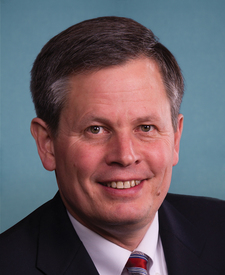
Steve Daines
Senator, MT • Republican
13 years in Congress (first took office 2013)
Sign in and give your stance on bills to see your alignment score with this member.
What Steve Daines said
- Floor speechNov 16, 2026TRIBUTE TO SERGEANT ADAM M. LEE
Mr. President, today I have the honor to recognize SGT Adam M. Lee as Montanan of the Month. Adam serves as a combat medic specialist with the Montana National Guard. Back in March, while was volunteering as a Life Flight paramedic in California, where his training and dedication to his duties were exemplified in a critical moment. When two hikers fell hundreds of feet from a trail near Tahquitz Rock in Idyllwild, Adam came to the rescue. Entering hazardous terrain in subfreezing temperatures, Adam and several rescue members administered aid and protected the injured hikers for days in the worsening weather. Adam, along with other rescuers, eventually evacuated the hikers and brought them to safety. Adam is commended for his exemplary performance of qualities of Montana guardsmen and embodying the command of ``The Montana Way.'' SGT Adam M. Lee received the Soldier's Medal during a ceremony at the Belgrade Armory in August for his heroic actions and saving the lives of the critically injured hikers. Lee continues to serve both his State and community and is pursuing a career as a physician assistant. I am thrilled to recognize SGT Adam M. Lee for his dedication to training and preparation, his heroism, and his selfless actions to help protect and defend our citizens with the utmost dedication.
Source → - Floor speechNov 10, 2026AUTHORITY FOR COMMITTEES TO MEET
Mr. President, I have eight requests for committees to meet during today's session of the Senate. They have the approval of the Majority and Minority Leaders. Pursuant to rule XXVI, paragraph 5(a), of the Standing Rules of the Senate, the following committees are authorized to meet during today's session of the Senate: The Committee on Agriculture, Nutrition, and Forestry is authorized to meet during the session of the Senate on Tuesday, November 10, 2026, at 11:45 a.m., to conduct a hearing. The Committee on Commerce, Science, and Transportation is authorized to meet during the session of the Senate on Tuesday, November 10, 2026, at 10:30 a.m., to conduct a hearing on a nomination. The Committee on Environment and Public Works is authorized to meet during the session of the Senate on Tuesday, November 10, 2026, at 10:30 a.m., to conduct a hearing on a nomination. The Committee on Finance is authorized to meet during the session of the Senate on Tuesday, November 10, 2026, at 11 a.m., to conduct a hearing on nominations. The Committee on Foreign Relations is authorized to meet during the session of the Senate on Tuesday, November 10, 2026, at 10 a.m., to conduct a hearing on nominations. The Committee on Health, Education, Labor and Pensions is authorized to meet during the session of the Senate on Tuesday, November 10, 2026, at 10:30 a.m., to conduct a hearing on a nomination. The Committee on the Judiciary is authorized to meet during the session of the Senate on Tuesday, November 10, 2026, at 11 a.m., to conduct an executive business meeting. The Committee on the Judiciary is authorized to meet during the session of the Senate on Tuesday, November 10, 2026, immediately following the executive business meeting, to conduct a hearing on nominations.
Source → - Floor speechNov 10, 2026SURVIVOR JUSTICE TAX PREVENTION ACT--Motion to Proceed--Continued
Mr. President, this month is Native American Heritage Month. It has been a meaningful tradition of mine for the past 14 years in Congress to celebrate the rich legacy of Montana's Tribes, and this month is particularly meaningful, as I close out my time in the U.S. Senate. My interest in Montana's Tribes began at a very young age. I grew up in the Gallatin Valley, back in the 1960s. In fact, I am a graduate of Longfellow Elementary School in Bozeman. I was a proud Bozeman Hawk in my high school days. As a child, I lived two doors down from a member of the Crow Tribe. This was on South Bozeman, a long time ago. And he was a code talker during World War II. His name was Barney Old Coyote. He was an American hero. Barney served our country during World War II by speaking the Crow language in a national ``code talk'' program. The beautiful complexity of the Crow language allowed it to be used to transmit and receive military intelligence without fear of being intercepted. Because of Barney and his fellow code talkers, countless communications were securely sent overseas. Many American lives were saved. In fact, in 2015, Barney Old Coyote was awarded Congress's most prestigious honor, the Congressional Gold Medal, along with fellow Crow code talkers Samson Birdinground, Cyril Not Afraid, and Henry Old Coyote. And for a fun fact, as a little grade school kid in Bozeman, I used to walk to school with Rachel Old Coyote, the daughter of Barney Old Coyote, the cousin of Darrin Old Coyote, who was once the chairman of the Crow Tribe. As you can see, my roots in Indian Country start at an early age and run deep. But, today, I would like to reflect on memories from working with Montana's Tribes, from the wins we have had over the years to priorities I hope my successors will continue after my departure. Montana is home to many Tribes, including the Crow, the Cheyenne, the Blackfeet, the Assiniboine, the Gros Ventres, the Salish, the Kootenai, the Pend d'Oreille, the Little Shell, the Sioux, the Chippewa, and the Cree. When I was elected to the U.S. House, back in 2012, as the at-large Member from Montana, there were 11 federally recognized Tribes. I made it a priority to introduce the Little Shell of the Chippewa Indians Restoration Act, which granted Federal recognition to the Little Shell Tribe. In 2019, after years of work, this bill passed and the Little Shell were finally granted the recognition they deserved. So, today, Montana is the home of 12 federally recognized Tribes, spread across 7 reservations, from Fort Peck in the east to the Flathead in the west. It has been my honor to visit each reservation and my priority to meet regularly with Tribal leaders and members, both back in Montana or in Washington, DC, to work closely together to improve the quality of life in Indian Country, whether it is healthcare, education, resource development, or increasing law and order. Each one of these communities has helped weave together a rich tapestry of culture in my home State into the place that it is today. The Battle of Little Bighorn, one of the most significant battles in Montana history, is one such example. In fact, this year we commemorate the 150th anniversary. The battle marked a pivotal moment of the Great Sioux War and the American Indian Wars. It was my honor to pass a resolution commemorating and honoring all who fought so that future generations understand and appreciate the enduring spirit of our Tribes. Another example is the legacy of Blackie Wetzel, who was a fierce champion of his people, a former president of the National Congress of American Indians, who advocated for Tribes, including in the Oval Office with J.F.K. In fact, in 1971, Blackie worked with Coach George Allen to create the iconic logo that became a powerful symbol of leadership and excellence during Washington's three Super Bowl victories. Reflecting back in 2002, Blackie Wetzel proclaimed: After the franchise lost its popular brand in 2020, Blackie's son Don Wetzel met with me to share how important the logo remained for him, his family, and many in Indian Country. He wanted to use the logo for the good of Native Americans, especially to raise awareness of missing and murdered indigenous women. But, instead, the logo was censored by even the NFL and on official merchandise. Since then, I am proud to say that the league and the team have taken steps to restore the logo to a place of honor and prominence. It is certainly a great source of pride for the Blackfeet Tribe and all Indian Country. This same warrior-like spirit is demonstrated through a compelling fact that many don't know. Listen to this compelling fact: Native Americans serve in the military at the highest rates in America of any ethnic group. They are patriotic. They are courageous Americans. They have a warrior ethos. They serve our country in uniform with distinction and great pride. As an example of that heritage, in 2020, I was honored to join the special ceremony renaming the Billings VA Outpatient Clinic in memory of Dr. Joseph Medicine Crow, a proud World War II veteran and Crow nation Tribal chief who earned a Bronze Star and was awarded the Presidential Medal of Freedom. During my tenure, I also fought to restore Tribal rights and promote our Tribal nations. I have been a member of the Senate Committee on Indian Affairs since the beginning of my time as a Senator 12 years ago. And so from my very start, I made communication and consultation with our Tribes one of my top priorities. The Northern Cheyenne Lands Act was one of our earliest victories and the second bill I ever got signed into law while serving in the U.S. House. And this bill corrected a 114-year survey error by the Federal Government when they expanded the Northern Cheyenne Reservation but failed to give them control over natural resources on the land. Tribal sovereignty has always been a core issue. And while there is still work to be done, there has been a lot of progress made. In fact, our team has worked with Tribal leaders from every corner of our State to address these priorities, whether it is water rights and infrastructure to investing in education and rural healthcare. I prioritized settling longstanding water rights issues and bringing clean water to Tribes. We were able to resolve all claims to water rights on the Blackfeet Reservation, and we permanently settled an over century-long dispute with the CSKT waters. And, most recently, my bills to reauthorize funding for water infrastructure in Fort Peck and to modernize the Crow Tribe water settlement were signed into law by President Trump. I also championed and signed into law the Protecting Indian Tribes from Scams Act to give Tribes and the FTC tools to fight against scams targeting Tribes. We worked on countless bills to address the missing and murdered indigenous women crisis and the scourge of drug trafficking and crime on our reservations. From the Savanna's Act and the Not Invisible Act to my Mitigating METH Act, we made significant progress in Tribal public safety. I was also honored to lead the annual resolution to bring awareness for Montana's missing and murdered indigenous women. But there is a lot of work left to be done. Before I leave office, I urge my colleagues to support Montana's final Indian water rights settlement and to pass my bill, the Northern Montana Water Security Act, because closing the chapter on Montana water settlements remains a high priority for my remaining weeks. I also urge my colleagues to pass my bill, the Crow Revenue Act, which would fix longstanding inholdings of the Crow Reservation, while providing certainty for the Bull Mountains Mine outside of Roundup, MT. I would truly like to thank all those who played a role in protecting and preserving our Tribal legacy. It has been an honor to collaborate so closely with leaders and Indian nations throughout the years. I am truly grateful to have been able to experience the traditions and the cultures of our Tribes, and I will leave office with a deeper appreciation for the enduring Indian spirit.
Source →
Sponsored
None loaded
Voted yes
Voted no
None recorded