No donor data for Bill Cassidy yet.
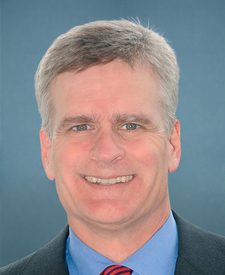
Bill Cassidy
Senator, LA • Republican
17 years in Congress (first took office 2009)
Sign in and give your stance on bills to see your alignment score with this member.
What Bill Cassidy said
- Floor speechNov 10, 2026REMEMBERING HILMER "PAUL" HERMANN, JR.
Madam President, I rise to pay tribute to Hilmer Hermann, Jr., known to his family, friends, and colleagues as Paul. Of all the people my staff and I have worked with during my time in the U.S. Senate, I can think of few others who were as generous, thorough, and patriotic as Paul. He was born in New Orleans on December 28, 1956, and passed away on September 23, 2026. The first thing to know about Paul is that he was a veteran. He signed up for the U.S. Air Force in 1976 and became a logistics manager supporting the Air Force's Deputy Commander of Resources. He served for nearly 17 years until taking medical retirement in 1993. Upon retirement from the Air Force, Paul already devoted a substantial portion of his life to serving our country. He could have ended his public service there. However, he became involved with Disabled American Veterans after one of their representatives successfully helped him file a disability claim with the U.S. Department of Veterans Affairs. Paul believed in paying it forward and so began working professionally for DAV. During his employment with DAV, he worked as a national service officer and later as their supervisor in New Orleans from 2002 to 2007. In this work, he helped other veterans and their families receive the benefits they earned from the U.S. Department of Veterans Affairs. This included helping veterans facing desperate circumstances before, during, and after Hurricane Katrina. He also spent time in Nashville working for DAV, including as acting supervisor for their office there. Despite retiring in 2009, Paul continued to serve veterans, including as Louisiana department commander and later department adjutant for DAV. This is when my staff and I became acquainted with Paul and his passion for veterans. My casework team is committed to helping veterans but relies on community partners to help veterans fill out VA disability claims and applications for other forms of assistance. Paul was available whenever our team needed to connect a veteran with someone who could help them file for assistance from the VA. In one case, my veterans' outreach coordinator was meeting with a veteran in my office who needed assistance with the VA. During that meeting, Paul called him about an unrelated matter. When informed about the veteran in my office, Paul spoke with her and offered to help her. In another case, a veteran who was clearly struggling with trauma visited my office requesting help with the VA. When my staff asked Paul to assist him with a disability claim, Paul quickly reached out. Communicating with this veteran was not easy, but Paul committed to helping him. Whenever there was a veterans' event or resource fair that would benefit from my office's presence, Paul let us know about it. Additionally, when advocating for his fellow veterans, he was respectful of me and my team but assertive in his requests. During a 2025 field hearing of the Senate Committee on Veterans' Affairs that I convened on improving mental health care for veterans, Paul delivered some of the hearing's most powerful testimony. He spoke knowledgeably about turnover among VA mental health providers, the lack of mental health care services for veterans in rural communities, and the need for suicide prevention and trauma-informed care training for providers who serve veterans. He also proposed practical solutions which demonstrated a deep understanding of the problems and his determination to solve them. When Paul was stationed at Charleston Air Force Base in South Carolina, he married Joan Gondron. Together they raised two children Paul and Jean-Edward and were blessed with six grandchildren. I extend my deepest condolences to Joan, their children and grandchildren, and everyone who knew and loved Paul. They can take pride in the legacy he leaves behind and in his impact on the lives of so many veterans. We rely upon unsung heroes who avoid public attention but steadfastly serve their neighbors for decades. They make it easier to provide for those who need a helping hand, including our veterans. Paul was one of those heroes. At our field hearing, Paul said that veterans need to know they matter and that they are not just numbers. He devoted his life to that cause, helping countless veterans and their families. Our community and our country are better because of Paul. I honor Paul Hermann for his extraordinary commitment to our country and his fellow veterans. May his example inspire others to serve those who have served us.
Source → - Floor speechNov 10, 2026SURVIVOR JUSTICE TAX PREVENTION ACT--Motion to Proceed--Continued
Mr. President, I have been working hard for 6 years to try to fix Social Security. I am leaving office at the end of December, and I am still working it now. Now, when we say ``fix Social Security''--let's just make it clear--I mean to rescue Social Security, to save Social Security. Social Security is like a baby which is right now sick and you are trying to rock it to sleep because the pain that is being released by that child may not be heard by people who aren't listening, but if you are paying attention, that pain is there. What am I describing? The problem with Social Security right now is that the trust fund is going insolvent. I will explain that. In years in which workers paid more in from their paycheck than was going out, the surplus was put in what is called the Social Security trust fund and put into Treasury bills. We have been in a situation for a while where there is more going out than there is coming in, and the difference between the amount going out and the amount coming in is being filled with the surplus of that trust fund. But that balance in the trust fund is falling. We are looking at an hourglass, and the hourglass is draining in the top, and it is coming down to the bottom. And it is not quite an hourglass, but if you can make the hourglass about 5\1/2\ years from now, that is when that trust fund is all empty on the top; there is no more surplus to supplement the amount coming in. At that point, by law--by law--by the wisdom of Franklin Delano Roosevelt, who started Social Security, when the trust fund is empty, the amount going out, by law, has to fall to equal the amount coming in. If we wait until the end, that fall can be a cut of 28.5 percent--almost a third of the benefits that someone on Social Security is receiving. And it won't just be those who are currently receiving; it will be all those who in the future would receive. They would also get a 28.5-percent cut. Now, my good friend John Kennedy, my fellow Senator from Louisiana, says: Don't worry--Congress will just borrow to make up the difference. Frankly, the Congressional Budget Office just assumes that Congress will not be up to the challenge and will just borrow it. But the Congressional Budget Office also says that if we don't fix Social Security--if we don't fix Social Security--our Nation's fiscal state will be so bad, they cannot model it. The amount of money required to bail out Social Security will make them unable--it is just going to be a disaster for our Nation's economy. Why do I say that? Why would it be a disaster for our Nation's economy? If you think about how 30-year mortgage rates have been climbing, that is because our government borrows so much money. And the more the government borrows, the less there is to help people borrow money for a mortgage. If we start borrowing the amounts required to pay for those Social Security benefits when the trust fund runs out, those 30-year mortgage rates will skyrocket, and the hope for home ownership for Americans who are not already in a home will evaporate. There will be no hope whatsoever. Now, this is an interesting situation. Social Security is so important, but at this point, the needs for the individual, which is to have a secure Social Security program, is the same as the need for our Nation to have a sound fiscal house. We have to come up with policies--we have to come up with policies in which the fiscal house of our Nation preserves the independence and the fiscal viability of the Social Security recipient. The two are one and the same. It is important for Congress to act, and the longer we wait to act, the worse it gets. Now, by the way, now is the time to fix it. Everybody always says it is the third rail of politics: You can't touch Social, or else you are going to lose. No. We are talking about rescuing Social Security. The other thing that people say--the other thing that is said is that Democrats don't want Republicans to get credit, Republicans don't want Democrats to get credit, so neither can rise above petty, partisan politics to come up with a solution in which somehow--somehow--nobody benefits more than the other party. I will leave aside the lack of statesmanship that is implied by that comment. But this is the perfect time for it. We have a lameduck President. President Trump is not running for reelection. We have a lameduck Congress. People who are leaving are leaving. Now is the time to pass the bill, and we get it done before the next Congress, and we can do it now. Others say we have to have hearings on this before we proceed. We have had five hearings--four directly about Social Security--in various committees across--two in Budget. There will be another Budget hearing this coming week. We have had two or three in the Senate Finance Committee. We have had a hearing related to Social Security in the HELP Committee. We have had our hearings. We have discussed the bill. Well, then say the critics: But you have got to get cooperation of the parties. I have got a commitment from John Thune, from Mike Crapo, from President Donald Trump that if we can get a hearing and a markup on Social Security, we can address this issue this month--this month--and, in December, perhaps have a vote. And we would address Social Security and take care of it to preserve it for the individual and to protect it for our Nation. ``So what is the holdup?'' you might say. Well, it is not for lack of plans. Senator Bernie Sanders has a plan. His plan would put a 12.4 percent tax on people above a certain income, and it would go up forever. It doesn't really pay for Social Security for 75 years, but it is a significant plan. I credit Senator Sanders. There are at least three Democratic proposals out there that are serious proposals. They basically involve raising taxes to pay for everything. There is my plan, which is actually a bipartisan plan, of which both Democrats and Republicans support. I will briefly describe my plan. My plan builds on something that Congress did under George W. Bush--which I think every Democrat and most Republicans voted for--to rescue the railroad retirement investment fund. In that time, there were more retirees and fewer workers, and the railroad retirement trust fund was going insolvent. So Congress said: You can invest that money into the stock market or into other investments--not Treasurys, which have very low yield, but others that have good yield. As it turns out, 20 years later, the market has done so well that that fund is paying all the benefits. So under the plan I am advancing, it is patterned after something that all Democrats and most Republicans voted for under George W. Bush to create an investment fund--an investment fund that bailed out the railroad retirement fund. It has worked fantastically. By the way, they didn't have to permanently raise taxes. They didn't have to cut benefits. They were able to do it just by doing this investment fund. That is kind of the proposal I have, with several Democrats and several Republicans, to create an investment fund separate from the Social Security trust fund. We put $1.5 trillion in it over 5 years and let it grow--let it grow for the next 70 years. And as it grows, it offsets any borrowing required to pay scheduled benefits. We take that 28.5 percent benefit cut off the table. And, yes, we borrow money to pay for those benefits. But because we have this money in the escrow account, it offsets that borrowing. We can take care of as much as 70 to 75 percent of what is needed to pay for these benefits for Social Security beneficiaries just with this investment fund. And with a tweak here and a tweak there, we can make it 100 percent. If you do a little bit more, we can increase benefits for millions of Americans. That is the plan we have. But, you know, neither my plan nor Senator Sanders' plan, right now, is scheduled for a hearing. My good friend the ranking member of the Senate Finance Committee from Oregon--my very good friend Ron Wyden--does not want to take this issue up. And I am just asking my good friend Senator Wyden that we should, that we need to be responsible, that we need to lean into this. We don't need to search for excuses why now is not the time. We need to understand that now is the time. Martin Luther King said: Now is the time to do what is right. If not, our Nation's credit rating and the assurance of the Social Security beneficiary that the money will be there in the future for her--we can reassure her, and we can take care of our Nation's fiscal house. But it takes courage. I admit it takes courage. But, I will say, the stars have aligned. Again, President Trump is all in. I have got Republican leadership. We have a bipartisan bill. But we also have competing bills, say, for example, from Senator Sanders and Representative Larson. So, Congress, let's do our job. Let's step up to the plate. Choose your metaphor. Lean into it. Let's do right for the American people. If there is anything we learned from last Tuesday's election, if people make promises and don't keep them, the voters will punish them. Congress has made a promise to take care of the American people's fiscal house that is represented by Social Security. Let's keep that promise. I yield the floor.
Source → - Floor speechNov 10, 2026SURVIVOR JUSTICE TAX PREVENTION ACT--Motion to Proceed--Continued
Mr. President, I ask unanimous consent that the order for the quorum call be rescinded.
Source →
Sponsored
None loaded
Voted yes
Voted no
None recorded